
Predicting Death from Sleep Apnea?
Test may pinpoint the risks for early death related to sleep disorder
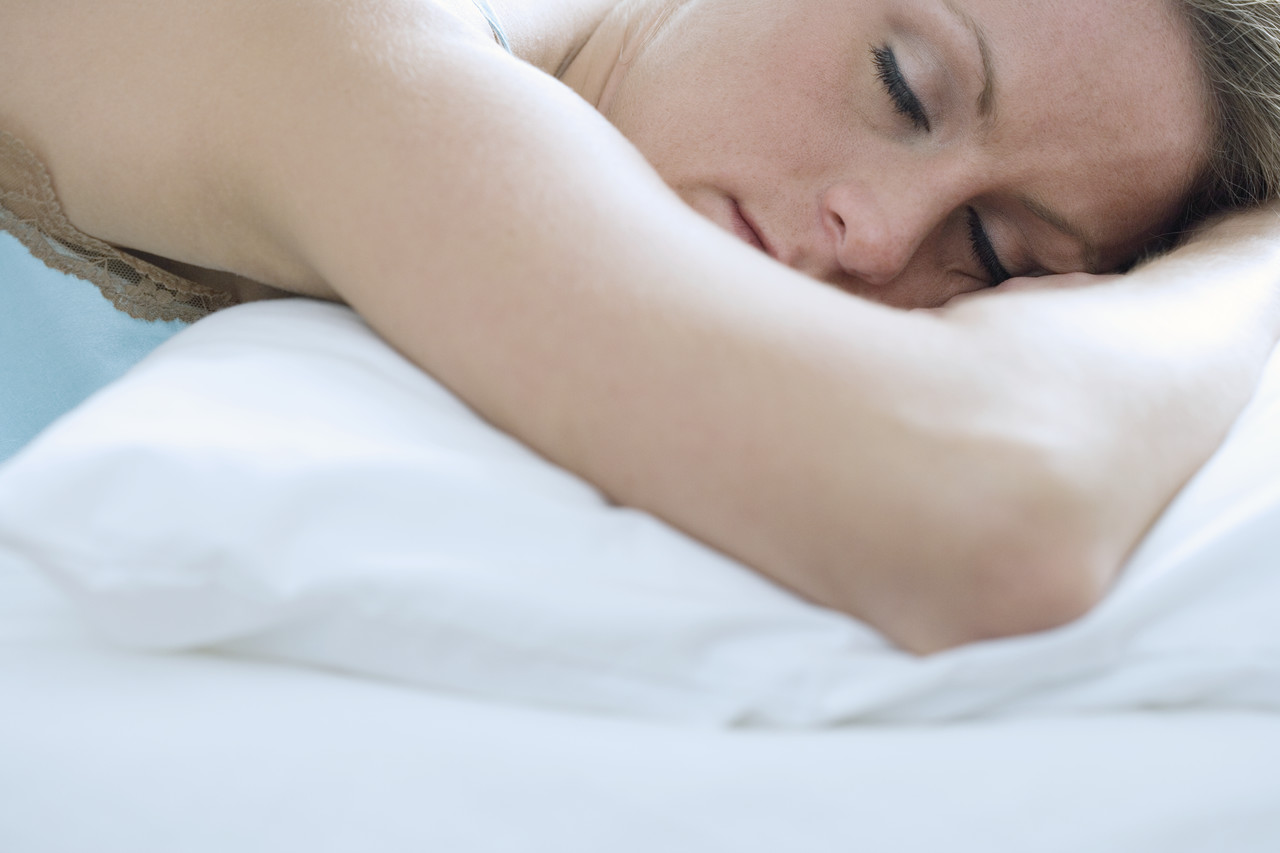
Patients with sleep apnea stop breathing, off and on, throughout their sleep cycle, which isn't the best way of getting a good night's rest.
And prior research already has shown that sleep apnea patients, as a result of their disease, are at greater risks of dying prematurely.
A new, preliminary study, suggests that there may be ways to forecast and lessen those dangers.
Talk to your doctor if you have problems sleeping.
Omar Minai, MD, a lung, allergy and critical care specialist at Cleveland Clinic's Respiratory Institute and the Sleep Disorders Center, was lead author of the preliminary study.
For 1,533 sleep apnea patients, Dr. Minai and his research team reviewed records from laboratory sleep tests and exercise stress tests that were no more than three years old. Patients had been connected to heart monitor machines during the exercise tests.
Of the 1,533 study participants, roughly 25 percent of them were designated as having “impaired functional capacity,” which, researchers said, was influenced by such factors as being female, being overweight and having a history of smoking.
Other factors for that group included having a heart that irregularly pumped blood and requiring an unusual amount of time for their heartbeat to return to normal after exercise.
Sleep apnea patients with impaired functional capacity were five time times more likely to die than sleep apnea patients whose functioning was not impaired, researchers concluded.
Then, researchers wrote, after accounting for how severe a patient’s sleep apnea was and how fast their heart rate recovered following exercise, patients with impaired functioning were 2.7 times more likely to die than unimpaired sleep apnea patients.
Among all the studied sleep apnea patients who did not have coronary heart disease – damage usually caused by cholesterol build-up inside the heart – the risks of dying were 4.3 times greater for those with impaired functioning than those without impaired functioning.
"Clinically, this is important,” Dr. Minai said, according to a press release, “because it suggests that, first, the addition of [impaired functional capacity] may be able to improve the ability of a stress test to predict mortality...and, second, it may also help identify a group of patients at especially high risk..."
This preliminary study has neither been peer-reviewed nor considered for publication in a medical journal.
Its researchers were slated to present the study during the American Thoracic Society’s conference, which runs through Wednesday in Philadelphia.
All information on this site is provided “as-is” for informational purposes only and is not a substitute for medical advice or treatment. You should consult with a medical professional if you have any questions about your health.
More health news
 Health News
Asthma Bad For a Good Night's Sleep
Asthmatics may be at higher risks of sleep apnea
 Health News
Sleep Apnea a Factor in Alzheimer’s?
Alzheimers disease and sleep apnea may be linked especially in older thinner patients
 Health News
Sleep Apnea Linked to Restricted Blood Supply
Obstructive sleep disorder patients benefit from CPAP