
New Teeth in Oral Cancer Imaging
Sweep imaging with Fourier transform offers 3D assessment of jawbone
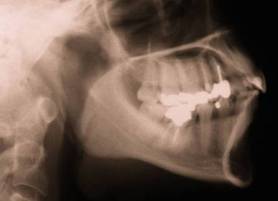
Advanced oral cancers frequently involve the jawbone. Up until now, though, assessing this involvement prior to surgery has been very difficult.
A magnetic resonance imaging (MRI) method known as SWIFT (sweep imaging with Fourier transform) seems to be able to detect whether or not the jawbone (mandible) has been affected in advanced oral cancers.
The SWIFT MRI helps to see the full extent of oral cancer.
Determining if cancer has invaded the jawbone prior to surgery could help the surgeon contain the malignancy without removing the entire bone. This would also help in planning whatever reconstructive surgery may be necessary.
Conventional imaging techniques - computed tomography (CT) and MRI don't always offer reliable information about the extent to which cancer has affected the jawbone.
The SWIFT method, though, creates a 3D image of the outer shell and inner cavity of the jawbone - something that's not possible with standard techniques, according to researchers at the University of Minnesota.
In a study to test the technology, samples were taken from patients with advanced oral cancer. Researchers
said the SWIFT technique provided clear evidence of tumor invasion, findings that were confirmed with microscopic examinations of the specimens.
This preliminary study was published in the September issue of Archives of Otolaryngology–Head and Neck Surgery.
Three of the authors have financial relationships with the manufacturer - Steady State Imaging, LLC.
All information on this site is provided “as-is” for informational purposes only and is not a substitute for medical advice or treatment. You should consult with a medical professional if you have any questions about your health.
More health news
 Health News
Replacing Toothless Smiles Now Easier
Shorter dental implants have successful survival rates and are a less invasive surgery
 Health News
Clean it Up Ladies, Lose the Dental Plaque
Postmenopausal women battle dental plaque
 Health News
Bad News Blood
Tumor cells in blood may indicate worse prognosis for head-and-neck cancer patients