
An Eye For Lab-Built Retinas
Retinal tissue structures manufactured from human blood in laboratory
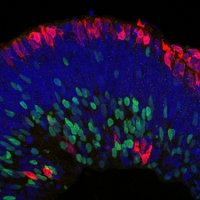
Scientists have found a method for creating laboratory-built retina structures from human blood. The synthetic retinas could be used to study and test drugs for degenerative eye disease, including retinitis pigmentosa, which causes blindness.
The development of the first complex manufactured human retina tissues began with a simple patient blood sample.
Get your eyes checked regularly if you're over 50 or have diabetes.
Dr. David Gamm, a pediatric ophthalmologist at the University of Wisconsin-Madison and senior author of the study, called the development "a solid step forward." He said while he's unsure how far the technology will take researchers, being able to grow a rudimentary retinal structure from a patient's blood cells is encouraging because it confirms earlier findings and because blood, the starting source, is easy to obtain.
Last year University of Wisconsin-Madison scientists were able to create structures from the most primitive stage of retinal development using embryonic stem cells and stem cells derived from human skin. These structures, however, lacked the organization of mature retinas.
They tried again, this time growing retina-like tissue containing proliferating neuroretinal progenitor cells using induced pluripotent stem (iPS) cells derived from human blood.
About 16 percent of the initial retinal structures developed distinct layers, similar to the back of an actual human eye. The outermost layer primarily contained photoreceptors, while the middle and inner layers were full of intermediary retinal neurons and ganglion cells. During the course of the study the retinal cells also were found to make synapses, necessary for them to communicate with each other.
In addition to using the generated retinal tissue for research and drug development, the retina structures may someday be useful to replace multiple layers of retina in patients with significant retina damage.
The research is funded by the Foundation Fighting Blindness, the National Institutes of Health, the Retina Research Foundation, the UW Institute for Clinical and Translational Research, the UW Eye Research Institute and the E. Matilda Ziegler Foundation for the Blind, Inc.
The results were published in the March 12 issue of Investigative Ophthalmology & Visual Science, the journal of the Association for Research in Vision and Ophthalmology.
All information on this site is provided “as-is” for informational purposes only and is not a substitute for medical advice or treatment. You should consult with a medical professional if you have any questions about your health.
More health news
 OTC
Genetic Link to Blinding Eye Disease Found
Gene mutation linked to retinitis pigmentosa tends to affect those of Jewish descent
 Health News
Prosthetic Retina Restores Vision
Simplier synthetic retina uses photovoltaic chip
 Health News
Eyes Wide Open to Stem Cell Potential
Human embryonic stem cell transplants may improve vision for two near blind patients