
Now, That is Gutsy
New drug target identified for treating Crohn's disease and Ulcerative Colitis
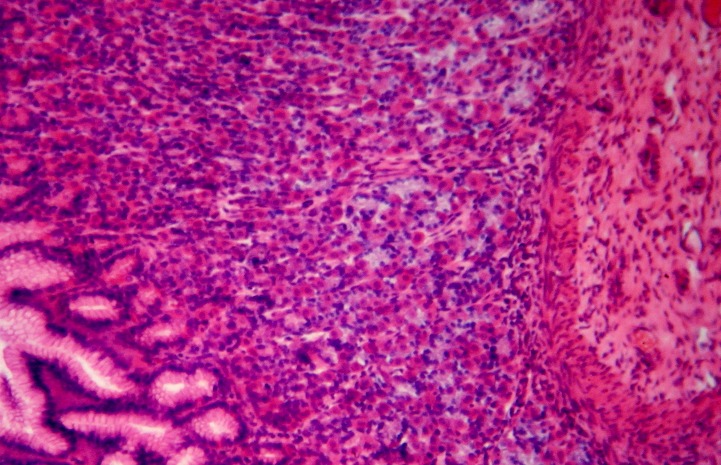
Crohn's disease and ulcerative colitis (UC) can be difficult to treat, with patients trying many different medications to get their symptoms under control.
New research has identified IL-23, a cytokine (a cell communication protein) used by the immune system to fight diseases, as a key contributor to the intestinal and systemic inflammation which is present in Crohn's and UC.
New treatments for inflammatory bowel disease may be on their way.
Zhanju Liu, M.D., Ph.D., of the Department of Gastroenterology at The Shanghai Tenth People's Hospital at Tongji University in Shanghai, China and colleagues analyzed IL-23 expression in intestinal mucosa by amplifying and quantifying a specific DNA molecule.
This DNA allowed for detection and quantification of one or more specific sequences in a DNA sample, allowing them to detect IL-23 in many different cells from peripheral blood and intestinal mucosa of IBD patients.
This finding suggests that IL-23 plays a major role in causing the secretion of cytokines that cause inflammation, as well as activating other immune cells such as the recently discovered Th17 helper T cells, another important in inflammatory mediator.
"Our studies highlight the pathogenic role of IL-23 in the induction of mucosal injury in the gut," says Liu.
"Moreover, our work also provides a novel approach in the management of IBD and some autoimmune diseases."
All information on this site is provided “as-is” for informational purposes only and is not a substitute for medical advice or treatment. You should consult with a medical professional if you have any questions about your health.
More health news
 Natural
Are IBD Drugs Safe During Pregnancy?
Drugs might be safe for pregnant women with Crohn's and ulcerative colitis
 Prescription Drugs
Antibiotics May Rough up Your Gut
Crohn's disease and ulcerative colitis associated with antibiotic use
 Health News
Finally, Something that IBD Sufferers Can Swallow
Researchers develop inflammatory bowel disease treatment