
S3 Sound is Not the Newest Boy Band
Heart sounds can help diagnose congestive heart failure
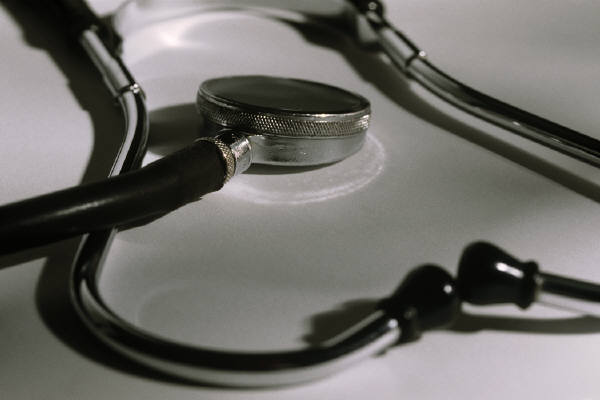
S3, an abnormal sound strongly linked to cardiac disease and heart failure, can be notoriously difficult for physicians to hear. The low-pitched, low-frequency sound isn't readily picked up by stethoscope alone.
To remedy this, researchers at the University of Cincinnati have discovered that acoustic cardiography -- a new technology that pairs a sophisticated 12-leed ECG with cardiac acoustic data -- increases accurate diagnoses in certain patients with acute heart failure.
When listening to the heart with a stethoscope, there are two "normal" sounds, S1 and S2, which are the "lub dub" sound of a normal heartbeat. The S1 is the sound of the tricuspid and mitral valves closing during the contraction of the heart. The S2 sound is that of the aortic and pulmonary valves closing. Extra heart sounds like S3 and S4 are abnormal and indicators of disease.
Since the S3 sound is so closely associated with heart failure, the research team looked at how measuring the presence of the sound changed physicians' treatment for patients. The study focused on those in whom diagnosing heart failure may present more challenges, including obese patients, patients with an intermediate level of a peptide associated with heart failure, and patients with kidney failure.
The researchers found that acoustic cardiography boosted diagnostic accuracy by 22 percent in patients with intermediate levels of the b-type natriuretic peptide (BNP) associated with heart failure. (BNP is a molecule released by the walls of the heart in response to increased stretching of the heart walls, from high blood pressure. It acts to reduce resistance in the blood vessels in an attempt to lower blood pressure.)
Sean Collins, MD, UC emergency medicine associate professor and lead author of the study, said the findings suggest heart failure is diagnosed only about half the time without the aid of acoustic cardiography, but with the tool, accuracy is improved to about 70 percent. He added the device was especially helpful in diagnosing a subsect of patients with intermediate to high BNP levels.
All information on this site is provided “as-is” for informational purposes only and is not a substitute for medical advice or treatment. You should consult with a medical professional if you have any questions about your health.
More health news
 Health News
Ultrasound May Be Sound for Head Trauma
Head injuries in kids can be spotted with ultrasound avoiding radiation exposure with CT
 Health News
COPD Flute Not a Fluke
COPD patients have a new sound technology to break up mucous
 Natural
Knee Injuries Lead to ACL Tears and Osteoporosis
Torn ligaments occur more often in women than men