
A Better Font For Vision Loss
Age related macular degeneration patients read better with Courier font

Reading small printed words can be a challenge for people with vision loss. It turns out that a simple font change can make a difference for these people.
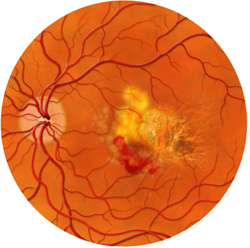
Age-related macular degeneration is a common eye condition among people over 50. It is the leading cause of vision loss in older adults. Losing eyesight can happen gradually or can progress very quickly.
A recent study found that patients with age-related macular degeneration were able to read better with the Courier font. Patients had the hardest time reading the Arial font, which is what agencies for the blind recommend.
If you have vision loss, ask for printed materials in Courier font.
Luminita Tarita-Nistor, PhD, of Vision Science Research Program, York University in Toronto, and colleagues set out to determine which of four typical fonts were best for patients with age-related macular degeneration.
Age-related macular degeneration is a condition that gradually damages the part of the eye that provides the sharp vision needed for seeing objects clearly. The condition does not cause total blindness and using side (peripheral) vision is still possible.
The study included 24 patients, average age 82, with bilateral (both eyes) age-related macular degeneration. Patients were recruited from an eye clinic and had no other medical conditions that affected their eyes or ability to think.
Reading performance on four different fonts was tested using custom made versions of the MNRead acuity chart. The MNRead uses continuous reading charts with a series of sentences that are identical in difficulty and length. The size of the words gets smaller and smaller as the test progresses.
The MNRead measures three areas of reading: reading acuity (the smallest print that could be read without significant errors); maximum reading speed (highest speed text can be read without being limited by print size); and critical print size (smallest print size that can be read with maximum speed).
Researchers used four different fonts for the custom-made charts. Fonts included Times New Roman (serif, proportionally spaced), Courier (serif, mono spaced), Arial (sans serif, proportionally spaced) and Andale Mono (sans serif, mono spaced).
Serifs are small lines tailing from the edges of letters. Sans serif fonts don't have those small lines tailing. Proportionally spaced means the font uses a different amount of horizontal space depending on the width of the letter. Mono spaced means each letter occupies the same amount of space.
Authors noted that agencies for the blind recommend common fonts that are sans serif and proportionally spaced.
Results indicated that the reading acuity of the patients was significantly better with Courier font compared to the other fonts.
Christopher Quinn, OD, president of OMNI Eye Services, and dailyRx Contributing Expert said "This is an interesting study that enhances our knowledge of how patients with macular degeneration can maximize their reading potential. We have many tools including low vision aids to assist the patient with reduced vision from macular degeneration. Knowledge of what fonts result in maximum reading efficiency will help these patients with improved reading function."
Researchers suggested that Courier may better allow these patients to read because of the larger spacing between the letters. In addition, the presence of serifs may have contributed to easier reading compared to the other fonts.
Type of font did not affect maximum reading speed or critical print size.
"Thus, it may be more important to identify a font that will allow these patients to read smaller print rather than focus on a font that would only modestly improve their maximum reading speed," the authors noted.
This study, titled "Courier: a better font for reading with age-related macular degeneration," was published in the Canadian Journal of Ophthalmology. It was funded by the Milton Harris Fund for Adult Macular Degeneration, Natural Sciences and Engineering Research Council of Canada, Vision Science Research Program, Toronto Western Hospital and Sandra and David Smith postdoctoral fellowship. Dr. Tarita-Nistor and colleagues disclosed no conflicts of interest.
All information on this site is provided “as-is” for informational purposes only and is not a substitute for medical advice or treatment. You should consult with a medical professional if you have any questions about your health.
More health news
 Prescription Drugs
Macular Degeneration Rx: A Closer Look
Age-related macular degeneration outcomes improved after anti-VEGF drugs became available
 Prescription Drugs
Lucentis Injection Approved
Roche drug for treatment of diabetic macular edema
 Prescription Drugs
FDA Approves Eylea For Eye Disorder In Older People
Maintains clearness of vision in those with wet age-related macular degeneration