
Chickenpox
Chickenpox is a very contagious disease caused by the varicella-zoster virus (VZV).
Infectious diseaseOverview
Chickenpox is a very contagious disease caused by the varicella-zoster virus (VZV). The majority of the cases are in children under age 15, but older children and adults can still get it. Chickenpox has become less common since the chickenpox vaccine has been introduced.
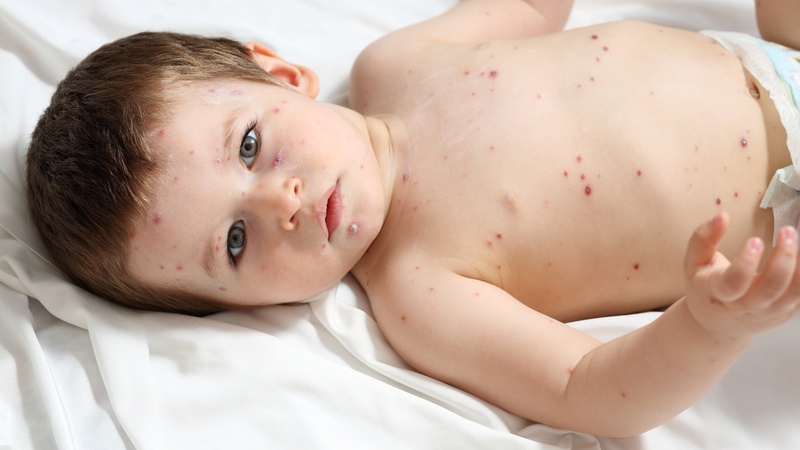
The typical symptom of chickenpox is an uncomfortable, itchy rash. The rash turns into fluid-filled blisters and eventually into scabs. It typically takes about one week for all the blisters to become scabs. The rash is usually appears on the face, scalp, chest, and back and then spreads to the rest of the body. Chickenpox is usually mild and lasts 5 to 10 days.
It spreads easily from infected people to those who have never had chickenpox or received the chickenpox vaccine. Chickenpox spreads in the air through coughing or sneezing. It can also be spread by coming into contact with or breathing in the virus particles from chickenpox blisters.
After being exposed to a person with chickenpox or shingles, it will take 10 to 21 days for someone to develop chickenpox.
Chickenpox can be serious, especially in babies, adults, and people with weakened immune systems.
Getting the chickenpox vaccine can help prevent most cases of chickenpox. Some people who have been vaccinated against chickenpox can still get the disease. However, the symptoms are usually milder with fewer blisters or no fever.
Once you get chickenpox, the virus stays in your body. You probably will not get chickenpox again, but the virus can cause shingles in adults.
Symptoms
- Fever
- Headache
- Tiredness
- Loss of appetite
- Stomach ache
- is older than 12 years of age
- has a weakened immune system
- is pregnant
- develops any of the following:fever that lasts longer than 4 days
- fever that is above 102°F (38.9°C)
- any areas of the rash or any part of the body becomes very red, warm, or tender, or begins leaking pus (thick, discolored fluid)
- severe illness
- confusion
- stiff neck
- frequent vomiting
- having trouble breathing
- severe cough
Causes & risk factors
Chickenpox is a very contagious disease caused by the varicella-zoster virus (VZV).
The virus spreads easily from people with chickenpox to others who have never had the disease or received the chickenpox vaccine.
- The virus spreads in the air when an infected person coughs or sneezes.
- It can also be spread by coming into contact with or breathing in the virus particles that come from chickenpox blisters.
- Chickenpox can also be spread from people with shingles since Varicella-zoster virus also causes shingles.
- A person with shingles can spread the virus to others who have never had chickenpox or received the chickenpox vaccine. In these cases, the exposed person might develop chickenpox.
A person with chickenpox becomes contagious 1 to 2 days before their blisters appear. They remain contagious until all the blisters have crusted over.
When to get help
See your doctor if the rash becomes very red, warm, or tender, or if there is high fever, trouble breathing, severe headache, or confusion. People who are pregnant, newborns, or have weakened immune systems should seek care promptly.
Related health news
 Health News
Chickenpox FAQ
Answers to the most common questions about chickenpox
 Health News
Chickenpox Vaccine Rules the Roost
Chickenpox vaccine effectiveness at ninety percent among US children
 Prescription Drugs
Teen Death from Chickenpox Reported
Chickenpox killed unvaccinated 15 year old girl after she developed complications
All information on this site is provided “as-is” for informational purposes only and is not a substitute for medical advice or treatment. You should consult with a medical professional if you have any questions about your health.